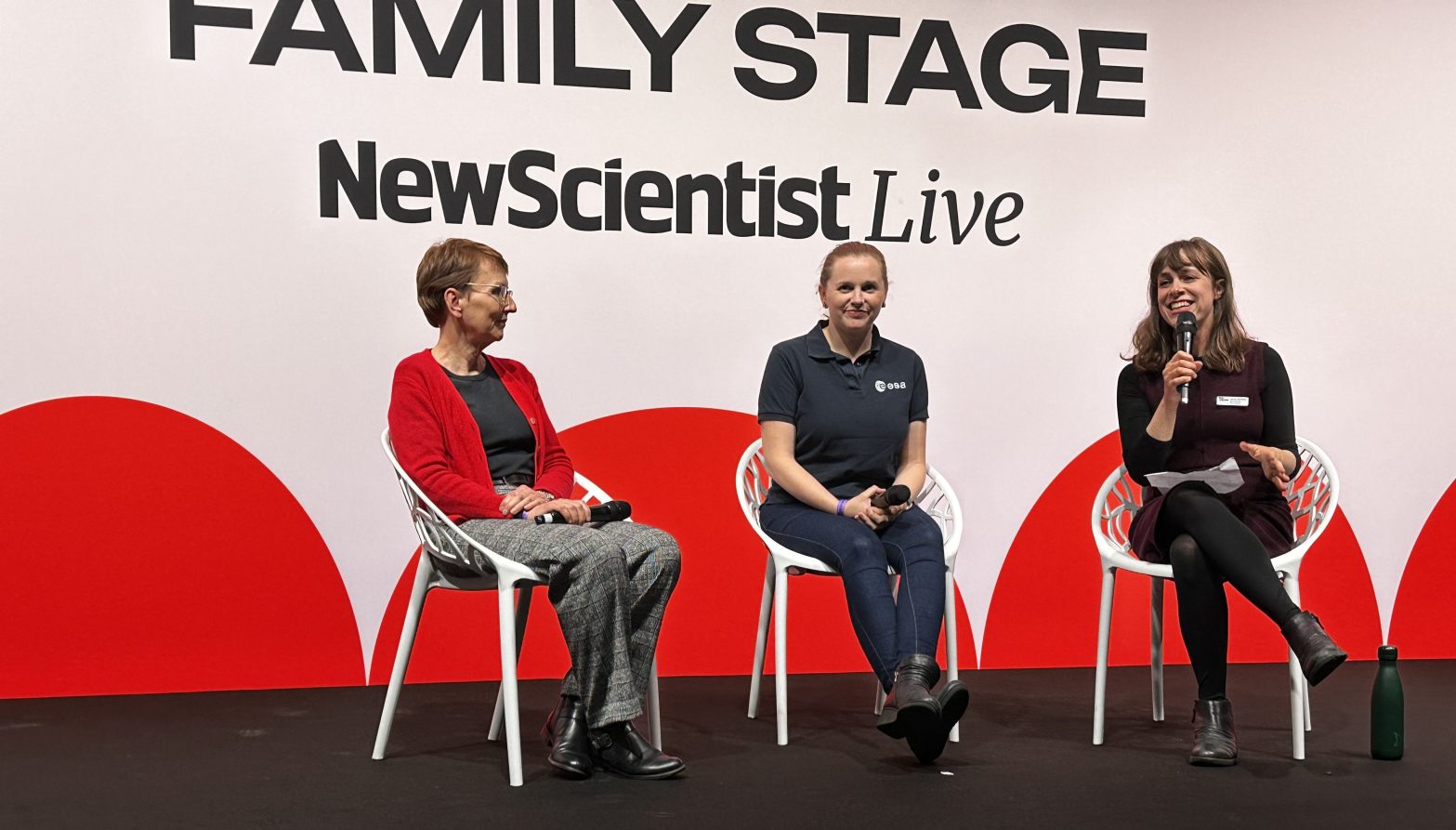
As regular readers will know, I recently undertook my annual trip to New Scientist Live in London. This year’s show was fantastic as ever, with loads to see and do, but the thing that stood out for me most was the chance to meet with, and chat to, two British astronauts.
Helen Sharman and Meganne Christian took part in an on-stage Q&A on the family stage during the Saturday afternoon.
Helen, for those of you unfamiliar, was the first British astronaut to go into space after famously responding to a radio advert that stated “Astronaut wanted. No experience necessary.” Launching on Soyuz TM-12 in May 1991, after spending 18 months training at Star City in Russia, she spent eight days in orbit aboard the Russian space station, Mir.
Meganne is a current member of the European Space Agency astronaut reserve after being selected in 2022. She, like Helen, is a scientist by trade and completed her ESA Astronaut Reserve Training in May 2026. She has conducted research missions to Antarctica’s Concordia station on two occasions where the isolation and self-sufficiency requirements are similar to spending time aboard long-duration space missions.
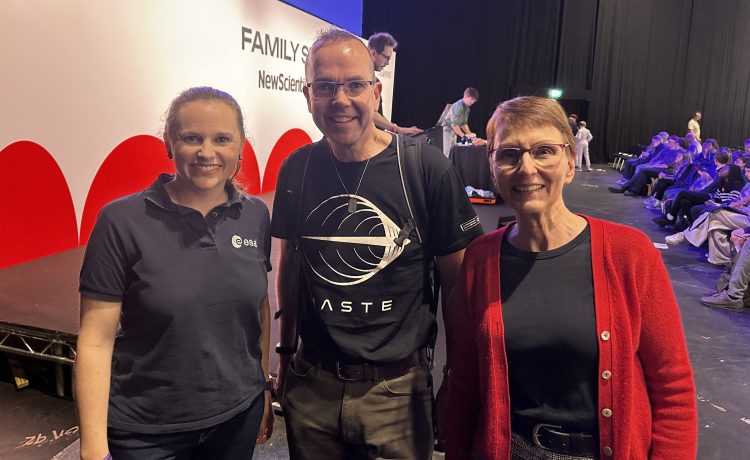
Both astronauts were extremely engaging and enthusiastic answering questions and sharing anecdotes on a range of topics.
Astronaut training and the launch experience were high on the agenda with Helen giving a great description of the noise and vibration and G-force that you feel when launched into space and then the following sensation of microgravity (often incorrectly referred to as zero gravity). Meganne has undertaken several parabolic flights on what is nicknamed the Vomit Comet. These are flights inside a modified aircraft that flies a parabolic flight path which creates periods of microgravity at the top of the parabola and increased G-load during the pull up and pull out phases at the bottom of the flight path. Astronauts undertake these flights to prepare them for the sensation of spaceflight. They also use these flights to conduct research experiments such as the graphene coatings research that Meganne has conducted.
Long duration space missions will require astronauts to be self sufficient and to deal with isolation and being remote from Earth. One of the most inaccessible places on Earth is the Antarctic and Meganne pointed out that it’s actually harder to rescue someone from Concordia Station during the winter than it is to return an astronaut from the ISS. The station is virtually inaccessible for months at a time due to the remote location, high altitude, extremely low temperatures and perpetual darkness. This means the crew of the mission must be entirely self sufficient.
One thing I didn’t realise was that CO2 levels on the ISS can be as much as 10 times higher than here on Earth at about 0.4%. Perhaps the most interesting thing they explained was that CO2 can form ‘pockets’ or ‘bubbles’ of air around an astronaut’s head in certain circumstances which can lead them to get headaches or feel sleepy. Ventilation and air movement is therefore vital on board the space station.
I also learned that the ISS apparently has a unique ‘smell’, which I’ll just leave there…
Both astronauts were extremely enthusiastic and engaging when discussing spaceflight, the challenges of a Mars mission and also how you pollinate plants in a microgravity environment (there are no bees!) and after the presenter led session concluded, the (mainly young) audience asked a range of questions to the astronauts before they wrapped up the session with this advice about becoming an astronaut.
If you want to be an astronaut, you have to be very good at something. That something could be any skill needed in space, so pick something you enjoy and then work at it. That way, even if you don’t get to become an astronaut, you will have enjoyed what you are doing anyway.
Sound advice from two great ambassadors for ESA, Britain and spaceflight in general.

