A space mission with a name that sounds like a dinosaur? That sounds like something I have to pay attention to…
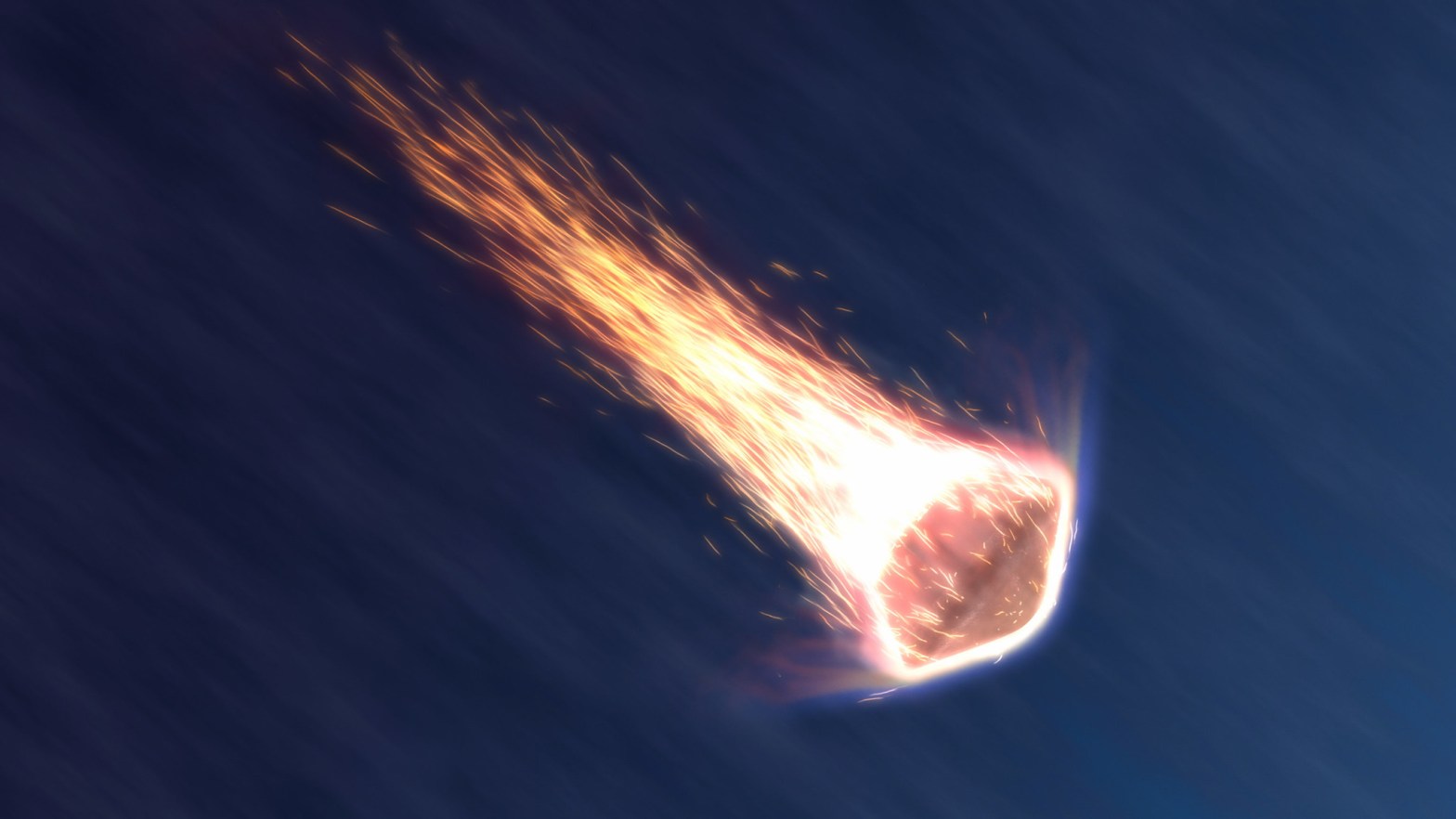
The seven year mission of OSIRIS-REx returns to Earth at around 14:55GMT today, 24th September 2023, containing rock samples from the asteroid Bennu. As the spacecraft approaches Earth it will release a landing capsule that will enter the Earths atmosphere at approximately 27,000 mph before deploying a parachute to slow the entry vehicle for a safe landing in the Utah desert.
You can follow along and watch the mission return and recovery live on NASA TV with coverage starting at 14:00 GMT. And according to the OSIRIS-REx blog as of 08:00 GMT the weather forecast is looking favourable for the sample return with dry conditions and light winds expected.

The dust and rock onboard the capsule, 250 grams of it, were collected in 2020 and will be studied by scientists to try and understand more about the formation of our solar system as this dust is thought to come from a time before our Sun existed. This is the largest asteroid sample ever collected for delivery back to the Earth!
The mission was launched in September 2016 and is properly called the Origins, Spectral Interpretation, Resource Identification, and Security-Regolith Explorer, but because that doesn’t really roll off the tongue, and NASA loves an acronym, it is referred to as OSIRIS-REx. It’s target was the asteroid Bennu (1999 RQ36) and amongst NASA’s many reasons for choosing it are that it offers us a window into the time when the solar system was formed due to the age of the material it is made of and is rich in organic compounds, which are the basis of all known life.
On a practical level, most asteroids in our solar system orbit in an area between Mars and Jupiter and a round trip would therefore take a very long time, and be much harder but Bennu crosses the orbit of our own planet and hence we’ve been able to launch and recover the mission in just over 7 years!
Wait, it crosses Earth’s orbit? You’re probably wondering now, will Bennu ever hit our planet?
Who knows, but the current best prediction suggests not in our lifetimes. After 2100 there is a 1 in 1750 chance it could hit Earth between then and 2300, after that? The models are too difficult to predict with any accuracy.
So, the sample comes back today and will initially be analysed at NASA’s Johnson Space Centre but after that will eventually be made available to science teams all over the world to study for generations to come.

With OSIRIS-REx concluding its mission, what will happen to the spacecraft that returned the lander?
Well in the spirit of reduce, reuse, recycle, don’t worry. Its not the end for OSIRIS! The mission will be renamed OSIRIS-APEX. After returning the sample capsule, the spacecraft will fire its engines and head out away from Earth on a new mission to explore the asteroid Apophis, arriving in 2029.
References
Adkins, J. (2023) OSIRIS-REx. Available at: www.nasa.gov/osiris-rex
(Accessed: 24/09/2023).
Shekhtman, L. (2023) OSIRIS-REx MIssion Blog. Available at: blogs.nasa.gov/osiris-rex/
(Accessed: 24/09/2023).
 Dan Roach Flying Author