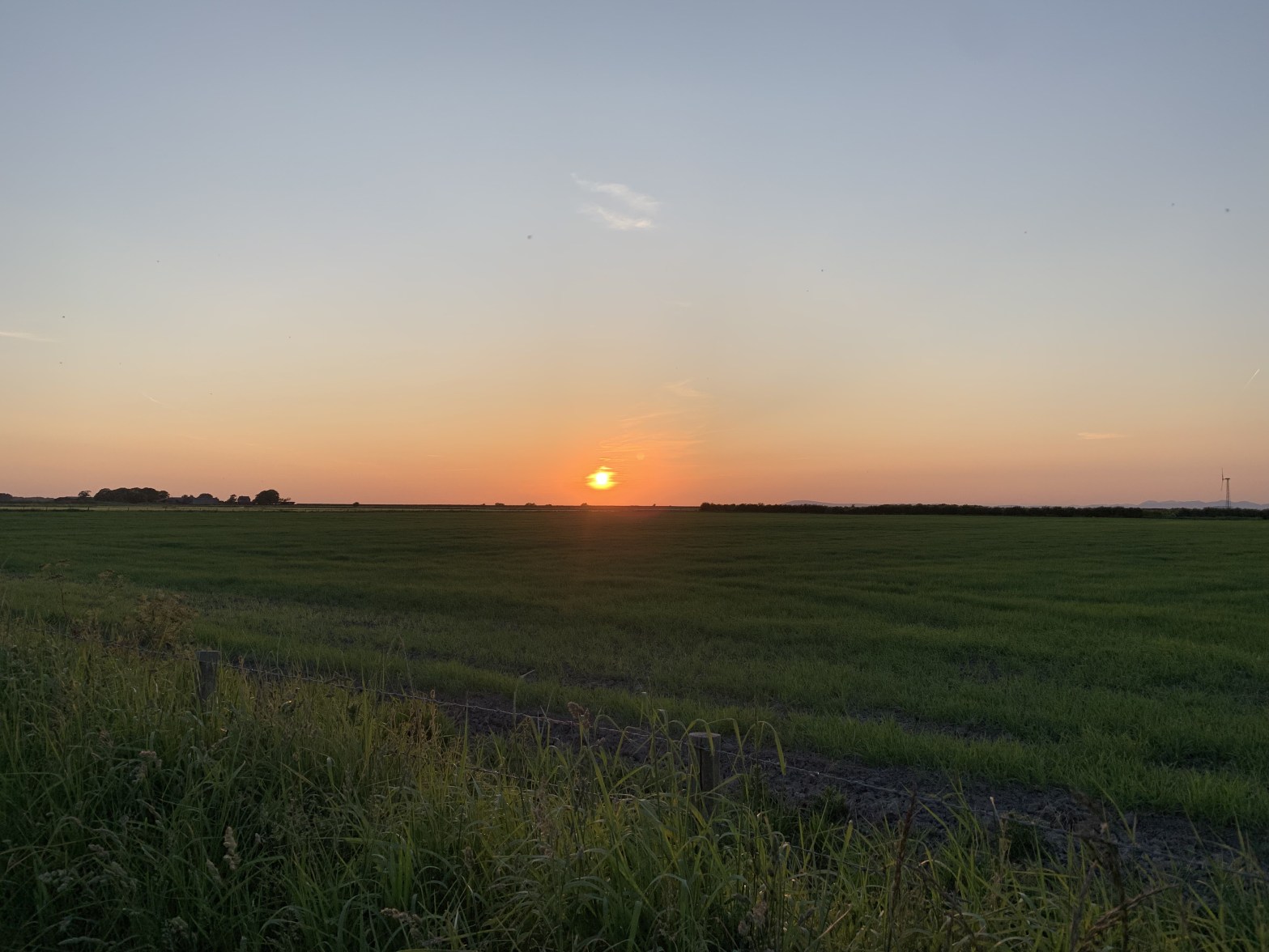
A quick glance out of the canopy and then to my wrist confirmed my suspicions. We had maybe 10 minutes of official ‘daytime’ left, the sun having departed over the horizon for more south westerly latitudes some 20 minutes earlier. Now, peering into the gathering gloom through my now wholly inappropriate sunglasses, I pondered the wisdom of leaving my seeing glasses in the clubhouse.
“I’m going around…AGAIN” announced the pilot-in-command for the fourth time, with a note of irritation and stress in their voice.
At this point, my friend and colleague in the clubhouse helpfully chose to chime in over the radio.
“Its getting a bit dark Dan.”
“Thanks for that… I had had no idea until you pointed that out. If you think its looking dark, you want to come up here and try flying in it with sunglasses on?” was my unspoken retort…
I’d gone for a flight as a passenger with another pilot, and we’d had a lovely flight over the hills to the east of the airfield, taking in some cracking views of both the landscape and the Irish Sea to the west. We’d returned in good time well before dark, but then the wind had decided to make things a little more ‘interesting’.
As we flew our first circuit, all indications were suggesting a northerly wind. All apart from the wind sock that is, which was hanging limply. The aircraft in front of us duly went around and called to advise there was a bit of a tailwind on short final. After setting up our approach, we followed suit, ending up too high and too deep as the slippery EuroFox steadfastly refused to come down and so the PIC, correctly, went around.
This then became the pattern, for the next three circuits. The general conditions indicating the Northerly runway, but low down, the wind being fickle and indecisive.
As an aside, it get progressively trickier to perceive depth after the sun dips below the horizon when you lose the sharp shadows. It’s worth remembering that as it can make a normally fairly easy approach and landing, far more challenging.

After the fourth go-around, and my friend’s helpful advice regarding the now diminishing number of photons in the sky – the PIC and I switched roles and we landed on the next attempt. However, the point of this post isn’t to pat myself on the back or indeed to criticise the other pilot. The point of this post is to highlight the human factors element of this situation.
Having been advised that there was a tailwind, and indeed having seen one a/c go-around already, we could have switched runways. However, the other a/c subsequently landed on its second attempt, and this I think contributed to the PICs decision to continue to try and land on the northerly runway. After two failed attempts and with the light fading, an element of tunnel vision almost certainly contributed to continuing to try and land on this runway, rather than leaving the circuit and setting up for a southerly approach, into wind. I think another factor would be the PIC’s knowledge that the approach to the southerly runway is not as easy as the northerly one and this also likely contributed to the persistent attempts to land on the same runway.
Finally, I suspect the knowledge that I was there in the passenger seat, as an FI (albeit with no official role in this flight), also played a part, with the PIC probably subconsciously aware that if things got too much they could hand off control to a more experienced pilot.
Anecdotally, I’ve also heard many experienced pilots make clubhouse comments such as “I never go around.” or the equally borderline arrogant “I never need to sideslip.” This is a dangerous attitude that not only adds pressure to newer pilots to always try to land regardless of the quality of the approach, but also means that those same pilots will likely develop poor habits that could lead to the wrong decision when things aren’t shaping up how they would like.
“Better to save your aircraft than to push a bad position…” to slightly misquote Viper from Top Gun.
If the approach isn’t going well, then you should always go around; this is drilled into every student pilot from the first time they fly a circuit. There’s always fuel for a go-around and a good landing rarely follows a poor approach. So the PIC made the correct decision every time to go-around. However, after two attempts and the same outcome, i.e. being way too high, we should have switched runways.
And the lesson for me?
Even when flying as a passenger I always take both sunglasses and seeing glasses into the sky with me now!
Fly safely (if you get chance during this weird UK “summer”).
 Dan Roach Flying Author