
Well no, not really. Not when you compare it to any number of ordinary activities that you perform every day without the rigorous risk assessments that we undertake before every single flight.
The end
Ok, I’m guessing you want a bit more analysis than that short assertion.
So, let’s examine the premise, that flying is dangerous.
Actually, the first thing I want to point out here is that it’s ‘not flying’ that is the problem. Flying is perfectly safe so long as you keep flying. It’s those infrequent occurrences of ‘not flying’ that get you. That’s the thing to watch out for.
The quotation below is extremely famous and has been referenced many times in many publications.
“Aviation in itself is not inherently dangerous. But to an even greater degree than the sea, it is terribly unforgiving of any carelessness, incapacity or neglect”- Captain A. G. Lamplugh
In other words, flying isn’t the danger. It is the human beings that are the problem. And this could be a pilot or an engineer. It could be an Air Traffic Controller, or it could be the bloke (or bloke-ette) that scares the birds off the runway. It could be a passenger. This is why we have procedures, checklists, assessments, medicals, oversight, check flying, licensing, ratings etc. All of these things mitigate the human element. Human beings are almost always the weak point in any complex system that you care to mention.
Let me ask you a question. Do you ask your partner to wake you up for work or prefer to set an alarm on your phone?
Which is least likely to ‘forget’?
Aha you say, “but what if the battery runs out on the phone?”
I’ll say “Tell me whose job it was to put the phone on charge when the battery was running low? Was it the phone’s responsibility? Or was it the human’s?”
A trivial example, and not even a complex system, but you take my point I hope.
However, things do go wrong with mechanical systems, and an aircraft is no exception to this.
I’ve used engine failure as the example throughout the rest of this article but there are countless other eventualities that a good pilot plans for and trains for. I’ve picked this one as it’s usually the first thing people say to assert that flying is exceptionally dangerous.
Usually something along the lines of “But you’ve only got one engine? What if it stops working?”
All of the aircraft I currently fly come with the following reassuring disclaimer in the front of the Pilots Operating Handbook:
“The engine of this aircraft is not certified, and could fail at any time.”
Joy.
I’ll grant you, it’s not the most soothing line of text I’ve ever read but it’s really not as bad as it sounds.
Aeroplanes do not stop flying because the engine fails, as I used to tell my Nan, God rest her soul. Aeroplanes stop flying in most cases because the pilot reacts incorrectly to something unfamiliar or that they have not prepared properly for. In this example, the engine failing.
Gliders fly, right? How many gliders have you seen with an engine attached to the front? I know, I know you can get self-launching gliders like the Vigilant or Venture in the Air Cadet Organisation, but generally gliders are just that, gliders. They get pulled into the sky by a winch or another aeroplane and they stay there for a while using thermal lift (like a bird of prey does) to stay airborne. Eventually they have to land, but that is almost always a non-event for an experienced glider pilot. It is normal.
Glider pilot’s get one go at a landing, well technically two if they dump the airbrakes to float a little further but it’s still only a single approach. There is no facility to ‘go around’ in a glider like we can in a powered aircraft by applying full power and raising the nose. Once you are committed to a landing, you are coming down.
So why are people so afraid of the engine failing? When the engine fails in a microlight or light aircraft, it simply becomes a glider. Not a very efficient glider, granted, but a glider nonetheless. The aircraft that I fly has a best glide speed of around 70mph. To achieve this I simply lower the nose slightly to the correct angle for best glide speed and this converts altitude into speed. Hey presto, we are a glider and we continue to fly. At this speed I will lose the least amount of altitude for every mile of ground that I cover. Or in other words it gives me the most range and options until I have to land.
Note the use of the word ‘land’ there, not crash. The only difference is that I will probably be landing, in a field, rather than back at the airfield, which coincidentally in the case of Barton Airfield, is also a field (air-FIELD in case you missed it).
The trick is to pick a nice looking field. Ideally one that has short grass, is long enough, is flat enough, is facing into wind, doesn’t have a herd of cows inside it for an audience, or a fence to act as arrester gear and is close enough to people to help you if you do mess up your landing. Remember, we are the weak link in the system and we can get things wrong.
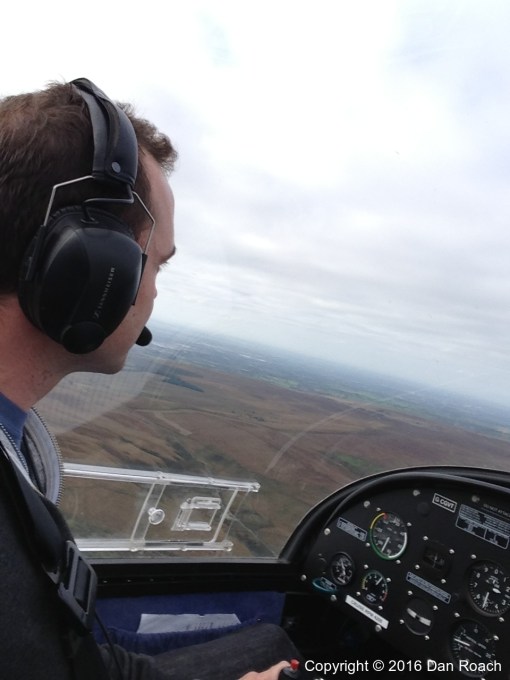
Landing in a field if done correctly should really be a non-event. The Eurostar when configured to land has a stall speed of just 36mph. This is the speed at which the aircraft stops flying and also the speed that we will be aiming to touch down at. 36MPH that’s just 6mph faster than the speed at which the government thinks it is safe to allow cars to drive past school children.
The other important thing, that all good pilots do, is practice. This was drilled into me during my training and I am determined to never allow complacency to slip in. I always challenge myself before every flight about my skills currency. And if I feel I am not current enough, or am out of practice? I find myself an instructor and we go and practice those things until I am happy again. I know a lot of pilots who take this approach. It is the right approach.
Anyway, practice, practice, practice, practice. And then when you’ve got it and its perfect? Practice some more.
I’ve never had an engine failure and I hope never to have one either. But if and when I do have an engine failure, I want to be prepared and ready to deal with it. So I regularly go out over the fields and turn the engine power to idle in a random location, and practice this skill. This might be more boring than going for an expensive bacon butty at a scenic airfield somewhere or a flight over the coast (I do those things too), but I do not want to be caught out by being unprepared. This is something that is avoidable with practice.
So that’s engines right? We have a whole host of other procedures that we learn during our training and continue to practice once we have qualified. We are also required to have a check flight with an instructor at a minimum of every two years. This check flying is more frequent for commercial pilots who fly the big jets that take you on holiday.
Talking about this we do a lot of checking in aviation. We check the aircraft in the morning before it flies. We check the engine oil, fuel, airframe, controls, propeller, tyres, avionics etc.
EVERY MORNING.
When was the last time you checked the engine oil in your car? Or that your indicators or brake lights work?
Thought not.
Then before each flight, we check the airframe again (in case someone has damaged it since the morning check), we check the controls work correctly, we check our seatbelts, the ignition system, the radio, the avionics and the brakes amongst a whole host of other things.
BEFORE EVERY FLIGHT.
When was the last time you got into your car and before you set off you checked the steering worked correctly? Or as you drive off, dabbed the brakes to check they are still working? Do you check your tyres aren’t damaged?
In flight we monitor the engine instruments and check our fuel levels constantly. We keep an eye out for a suitable field to land in, just in case. We avoid flying low over built up areas, just in case. We keep an eye out the cockpit at all times looking for other aircraft and we listen to the radio in case we hear anyone nearby.
Before we land we assess the wind conditions, check for other aircraft in the vicinity, ensure our fuel is ok, we have a check list for this too.
After landing we complete the cryptically named ‘after landing’ checklist and then the ‘shutdown checklist’ where we again check the ignition system, in case one of the dual circuits failed in flight.
And before all of this? Before we even leave our homes to drive to the airfield we do a checklist on ourselves. We are the humans, right? We are the weak links, remember? Am I fit to fly? Am I ill or on medication? Am I stressed? Have I been drinking recently? Did I sleep ok? Have I had enough to eat to ensure my blood sugar is ok?
I guarantee none of you will make that assessment or do any of the above checks before you jump into your four wheeled metal boxes to drive to work. Once in your car you will likely then head out onto the motorway where you are surrounded by potentially up to four lanes of other drivers in close proximity who will not have done any of the above checks and who may not be fit to drive, or even competent to drive any more as we don’t do check-drives in this country. You pass at 18, and 50 years later, when the driving landscape has changed unrecognisably, you are still deemed competent to drive, because you could half a century ago.
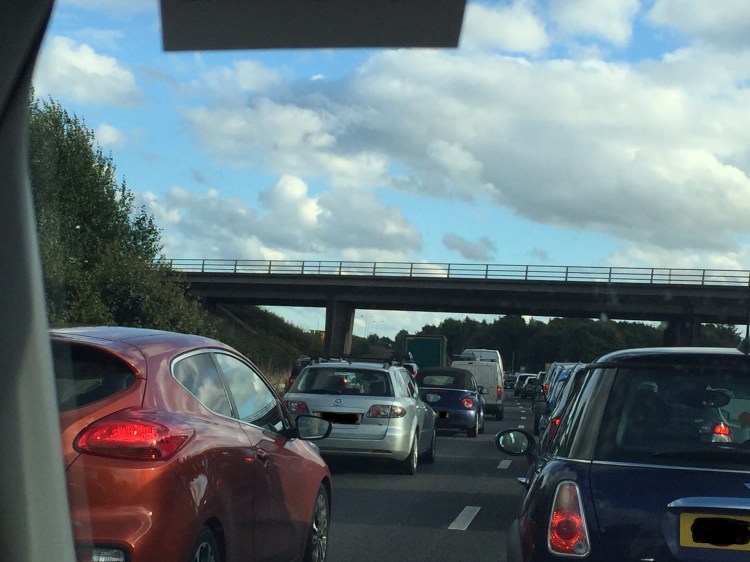
But every day we get into our cars and drive to work and never even think about the risks we are taking. In fact if you are a conscientious and diligent pilot it is my view that there is more uncontrolled risk involved in your drive to the airfield than once you actually get airborne.
So now please tell me again. Do you think flying is exceptionally dangerous?
Flying isn’t dangerous. It’s people, people are dangerous. And aviation doesn’t have exclusive rights to humanity’s ability to make mistakes.
Copyright © 2016 Dan Roach
 Dan Roach Flying Author
Nice one Danny
LikeLike
I love this!!! Yes. I’m taking a break from research and human error…and i was just thinking this. The only way to completely mitigate risk is don’t do it! 🙂
LikeLike
Thanks Karlene, it’s an article I felt I could have done 10000 words on, but that would’ve been taking a bit of a liberty with a blog post!
LikeLike
Brilliant article, for pilots and pilots’ friends and family. I fly a single seat microlight and think safety before, during and after flight. Couldn’t agree more with everything. Thanks for taking the time to write it.
LikeLiked by 1 person